
Fiber Is Having a Moment. But Are You Actually Eating Enough?
Protein has dominated the nutrition conversation for years. Now fiber is finally getting some attention, and honestly, it is about time.
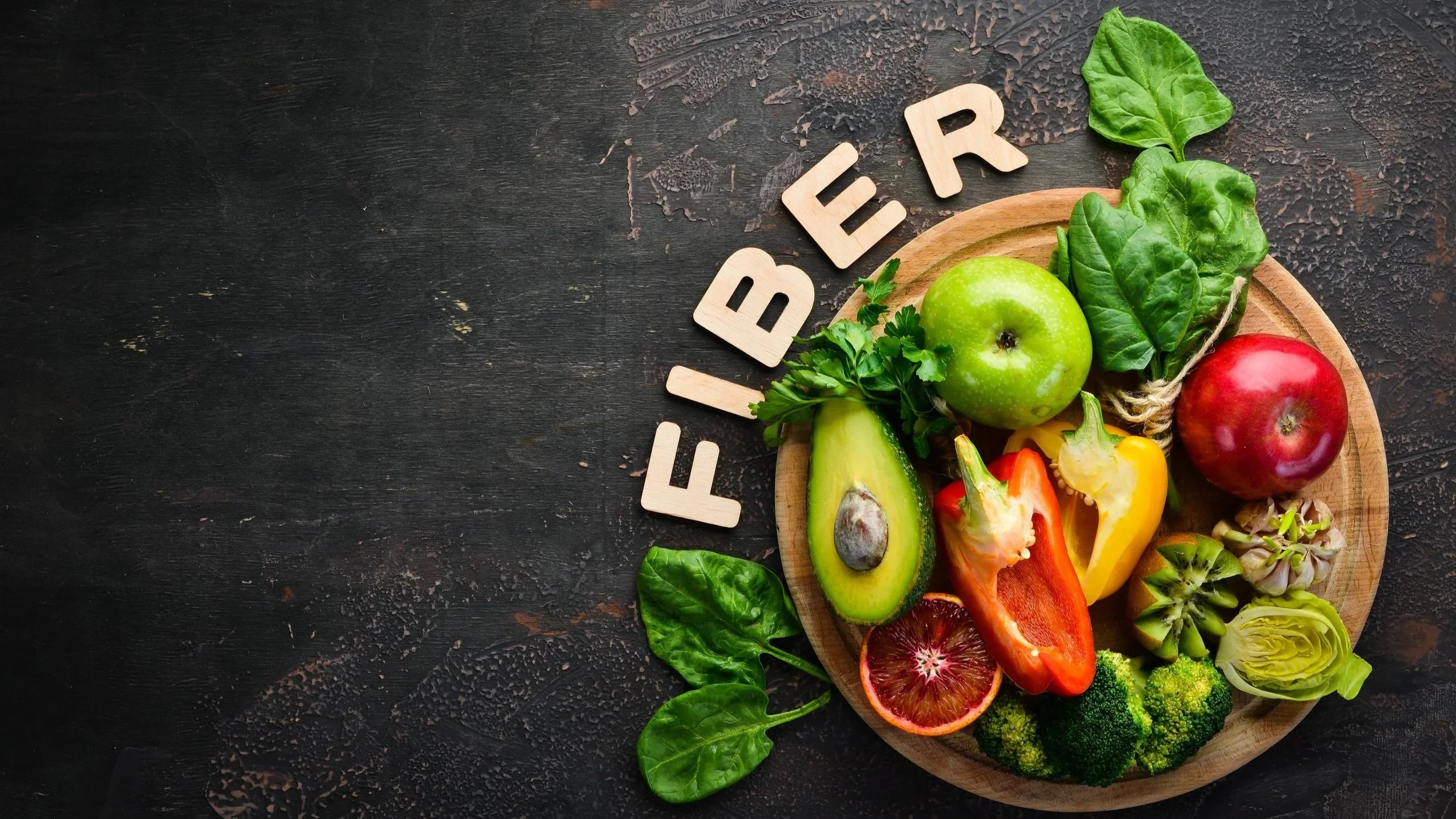
For the past several years, protein has been everywhere. High-protein yogurt, high-protein cereal, protein bars, protein coffee… they have even figured out how to put protein in water!
Listen, don’t get me wrong, I love protein. I talk about it all the time with my clients, especially when we’re discussing muscle, metabolism, menopause, healthy aging or weight management. However, another nutrient has been getting some well-deserved attention lately, and this is:
F I B E R
Fiber is not nearly as glamorous as protein. Nobody leaves the gym bragging about how many grams of fiber they ate that day. But when you look at everything fiber does for us, from our gut and bowel health to blood sugar, cholesterol, satiety and the microbiome… it’s actually pretty impressive.
Despite all the attention we give to what we supposedly need to remove from our diets, carbs, gluten, sugar, seed oils, processed foods, or whatever social media is mad at this week, maybe we should spend a little more time asking: What aren’t we eating enough of?
For many of us, fiber belongs near the top of that list, and before you run out and buy a fiber supplement or start adding three tablespoons of chia seeds to everything you eat, let’s talk about what fiber actually is, how much you need and, most importantly, how to get more of it without making yourself miserable in the process.
So, What Exactly Is Fiber?
Fiber is technically a type of carbohydrate, but unlike other carbohydrates, our digestive enzymes don’t completely break it down. This is actually a good thing.
Different types of fiber do different things as they travel through our digestive system. Some help add bulk to stool and keep things moving. Others dissolve in water and can form a gel-like substance that influences digestion, blood sugar and cholesterol… and some are fermented by the bacteria living in our colon.
This is where fiber gets really interesting.
Stay with me here :)
When certain fibers reach the colon, our gut microbes ferment them and produce compounds called short-chain fatty acids, including butyrate, acetate and propionate. These compounds are being studied for their roles in intestinal health, metabolism, immune signaling and other aspects of health.
So, when I tell my clients that what they eat affects their gut microbiome, this is part of what I’m talking about. You are not just feeding yourself. You are feeding the trillions of microorganisms that live in your gut too.
I mean, no pressure… apparently, we are responsible for feeding everybody.
Soluble Fiber, Insoluble Fiber... Do You Really Need to Know the Difference?
Yes and no.
You do not need to sit at dinner wondering whether the Brussels sprouts you are eating contain enough soluble versus insoluble fiber. I certainly don’t. However, understanding the basics can help.
Soluble Fiber: Soluble fiber dissolves in water, and some types form a gel in the digestive tract. You will find it in foods such as oats, barley, beans, lentils, apples, citrus fruits, chia, flax and psyllium. Certain soluble, viscous fibers can help slow digestion, moderate the rise in blood sugar after a meal and help lower LDL cholesterol.
Insoluble Fiber: Insoluble fiber doesn’t dissolve in water in the same way. It helps add bulk to stool and can support normal bowel function. Whole grains, wheat bran, vegetables, nuts, seeds and the skins of many fruits and vegetables provide insoluble fiber.
Good news… fiber science has moved well beyond simply putting everything into one of those two buckets. Researchers also look at characteristics such as fermentability and viscosity, because different fibers behave differently in our gastrointestinal tract.
Which brings me to something I say over and over again:
Variety matters.
Instead of worrying about which “type” of fiber you are getting at every meal, eat a variety of vegetables, fruits, beans, lentils, whole grains, nuts and seeds and you’ll naturally get different types.
How Much Fiber Do You Actually Need?
Here is where we get practical…
The FDA Daily Value for fiber is 28 grams per day, based on a 2,000-calorie diet. The American Heart Association recommends that adults get at least 25–34 grams of dietary fiber per day for good health. Individual needs can vary depending on age, sex, calorie needs, health status and GI tolerance.
The AHA’s newly updated 2026 Dietary Guidance to Improve Cardiovascular Health also emphasizes something I think is really important: instead of obsessing over fiber as an isolated nutrient, build an overall eating pattern naturally rich in fiber through vegetables and fruits, whole grains, legumes, nuts, seeds and other minimally processed plant foods.
The AHA also encourages choosing mostly whole grains instead of refined grains, including about three servings of fiber-rich whole grains per day as part of a heart-healthy dietary pattern. I love this approach because I don’t really want you walking around all day doing fiber math, and when I’m working with someone, I am usually less interested in whether they are hitting exactly 28 grams on day one and more interested in one question:
How much are you eating now?
Because if you’re currently getting 10 or 12 grams of fiber a day, I don’t want you waking up tomorrow and deciding you’re going to eat 35.
Trust me… neither does your gut.
Why Am I Such a FIBER-FAN???
For starters, fiber is important for gut health (and you know how much I like to talk about “gut health”). Certain fibers provide substrates that our intestinal microbes can ferment, influencing microbial activity and the metabolites those microbes produce.
This is also an area where I think social media tends to oversimplify things.
You may hear statements like:
“Eat this food and it will fix your microbiome.”
No. No. No. No.
The gut microbiome is incredibly complex, and research suggests people can respond differently to different fibers depending on the type and dose of fiber, their existing microbiome and other individual factors. This is one of the reasons I believe so strongly in bioindividuality!
BIOINDIVIDUALITY
The food that makes one person’s digestive system feel fantastic can leave someone else bloated and miserable.
Fiber and Blood Sugar
Fiber is also important for metabolic health. Certain soluble and viscous fibers can slow digestion and glucose absorption, which can help moderate the rise in blood sugar after a meal.
Think about an apple compared with apple juice. Both came from an apple, but your body doesn’t experience them exactly the same way. The whole apple gives you its natural food matrix, including fiber, while juice has had much of that structure and fiber removed.
This is why I am constantly telling people:
It’s not just about carbs. It’s about the quality and context of the carbohydrate.
What did that carbohydrate come packaged with? Fiber? Protein? Healthy fat? Or has most of the original food structure been stripped away? These things matter!!
Fiber and Heart Health
This is another reason fiber deserves much more attention.
Fiber is good for your heart, too. Certain types of soluble fiber can help lower LDL (“bad”) cholesterol, and eating a fiber-rich diet is consistently associated with better heart health overall.
The American Heart Association’s current dietary guidance emphasizes fiber-rich foods as part of an overall heart-healthy eating pattern, including vegetables, fruits, whole grains, legumes, nuts and seeds.
This is important to note, as we don’t need to find some exotic “heart-health superfood.” Sometimes the foods with decades of evidence behind them are not particularly exciting. Beans and oats are sitting quietly in the corner doing their job. I love that for them :)
And Yes, Fiber Helps You Poop :)
There. We said it.
We can talk about microbiota and short-chain fatty acids all day long, but if you have ever been constipated, you don’t particularly care about microbial metabolites. You just want to go to the bathroom!!
Fiber can absolutely help with bowel regularity, but here is where people sometimes get themselves into trouble:
More fiber isn’t always the answer to every digestive problem.
Different fibers affect stool consistency and intestinal transit differently. Fluid intake matters, and certain gastrointestinal conditions require individualized recommendations.
If you are dealing with significant constipation, IBS, severe bloating, gastroparesis, inflammatory bowel disease, a stricture or another GI condition, simply dumping more fiber into your diet is not necessarily going to fix the problem. Sometimes it can make you feel worse.
“Phil, I Started Eating More Fiber and Now I’m Bloated.”
I hear this ALL the time.
Someone decides they are going to get healthy, and overnight breakfast becomes oatmeal with chia, flax and berries. Lunch is a giant salad with chickpeas. Snack is an apple and almonds. Dinner includes Brussels sprouts, quinoa and beans, and by bedtime:
“PHIL. WHAT DID YOU DO TO ME?”
They went from very little fiber to enough fiber to feed a small village in approximately 24 hours. Many fiber-rich carbohydrates are fermented by gut bacteria, and fermentation naturally produces gas. If you dramatically change the amount or type of fiber you are eating, your GI tract may need some time to adapt.
That’s why I generally recommend increasing fiber gradually and drinking adequate fluids along the way.
This is not another situation where more is automatically better. Your goal is NOT to win a fiber contest. Your goal is to find an amount and variety that supports your health and that your body tolerates well.
Whole Foods vs. All These “High-Fiber” Products
Now we are getting into one of my favorite subjects, “Food Labels” :)
I know.... not overly exciting, but hang in there!!!
Food manufacturers know consumers are interested in fiber. So we are seeing HIGH FIBER! splashed across cereal boxes, bars, tortillas, cookies, drinks and all sorts of packaged foods. Does that mean added fiber is bad? No.
Some added fibers have legitimate physiological benefits, and the fact that a food is packaged doesn’t automatically make it unhealthy. However, I don’t want you choosing a food because one impressive number is screaming at you from the front of the package.
READ THE LABEL...
Look at the Nutrition Facts panel and ingredient list.
How much fiber is actually in it? What else is in it? How much added sugar? What’s the sodium?
Does it contain protein? What are the ingredients? Does it satisfy you? Does your gut tolerate it?
MOST IMPORTANTLY...
What does the rest of your diet look like? A cookie with added fiber is still a cookie, and that is totally okay! You can eat a cookie.
We just don’t need to pretend it’s broccoli :)
What About Fiber Supplements?
Fiber supplements can absolutely be useful.
Psyllium, for example, has evidence supporting benefits for bowel regularity and LDL cholesterol reduction. There are also situations where someone simply has difficulty getting enough fiber through food, and supplementation may make sense. However, I still like a food-first approach whenever possible, because fiber-rich foods don’t only provide fiber! These foods bring along vitamins, minerals, polyphenols and other beneficial compounds that a scoop of isolated fiber can’t completely replicate.
So my philosophy is pretty simple:
Food first. Supplement strategically when needed.
A scoop of fiber powder doesn’t mean vegetables are now optional.
Nice try. 😉
Okay Phil, What Does 25–30 Grams of Fiber Actually Look Like?
This is the part I think is missing from a lot of nutrition advice. It’s very easy for me to tell you to “eat 30 grams of fiber,” but what does that actually look like on a Tuesday?
It could be much simpler than you think.
Breakfast might be oatmeal topped with berries and a tablespoon of chia or ground flax.
Lunch might be a salad or grain bowl with plenty of vegetables and a half-cup of chickpeas or lentils.
Snack might be an apple with a handful of almonds.
Dinner might be salmon or chicken with roasted Brussels sprouts and a sweet potato with the skin.
You don’t need to eat anything unusual, do a “fiber detox,” or drink some mysterious green sludge to get enough fiber. By simply adding more fiber-rich plant foods to the meals and snacks you already enjoy, you can get surprisingly close to the recommended 25–30+ grams per day. No complicated meal plan and no turning every meal into a nutrition project. Just real food, simple changes, and habits that fit into real life.
Want to Make This Even Easier?
I created Phil’s Fiber Cheat Sheet: 30 Grams of Fiber Without Eating Like a Rabbit to show you exactly what this can look like in real life.
It includes common fiber-rich foods, how much fiber they provide, simple ways to add more to your day, and an example of how to reach around 30 grams without turning every meal into a math problem.
Download Phil’s FREE Fiber Cheat Sheet
My Favorite Ways to Eat More Fiber Without Overhauling Your Life
Add berries to breakfast.
Stir chia or ground flax into oatmeal or yogurt.
Add beans or lentils to soups, salads and bowls.
Leave the skin on potatoes when appropriate.
Add avocado to eggs, sandwiches or salads.
Choose whole grains more often.
Pair fruit with nuts for a snack.
Sprinkle nuts or seeds onto foods you are already eating.
Add another vegetable to dinner.
IMPORTANT: Please do not feel like you have to do all of those tomorrow.
Pick one or two. Once those become normal, add something else.
That is how habits actually stick.
Okay… Now We Need to Talk About GLP-1s
If you are taking a GLP-1 medication, you have probably heard a lot about protein, and for good reason. Preserving muscle during weight loss matters enormously, but I don’t want fiber getting lost in the protein conversation.
GLP-1 medications can significantly reduce food intake, and gastrointestinal side effects, including constipation, are common with some of these medications. That makes adequate nutrition, fluids and thoughtful fiber intake particularly important.
However, this is another situation where more is not automatically better.
Someone experiencing significant nausea, early fullness, constipation or other GI symptoms may need individualized recommendations rather than simply being told to “eat more fiber.” I will be digging much deeper into this in my updated blog (coming soon): GLP-1s Have Changed Weight Loss.
So, Is Fiber the New Protein?
Here is the reality….
Protein matters.
Fiber matters.
Healthy fats matter.
Carbohydrate “quality” matters.
Vitamins and minerals matter.
The overall pattern of how you eat matters far more than obsessing over whichever nutrient happens to be having its moment on social media.
If this blog gets you to do anything, I hope it’s simply to look at your plate a little differently and ask yourself:
Where are your plants?
Could you add berries to breakfast?
Could you put beans in your salad?
Could you add chia to your oatmeal?
Could you try lentils this week?
Could you eat the potato with the skin?
Could you rotate your vegetables instead of buying broccoli for the 437th consecutive week?
The good news is that small changes add up. When we start adding more whole, fiber-rich foods to our diet, we are not just getting more fiber. We are also getting vitamins, minerals, polyphenols and other beneficial plant compounds, while feeding the microbes that help support a healthy gut.
By making these small changes, we begin crowding out some of the foods that are not doing quite as much for us. That is a very different mindset from another restrictive diet, and that is exactly the point.
You do NOT need to eat perfectly, chase every nutrition trend or turn fiber into another number to obsess over. Learn what your body needs, give it more of the foods that support it, pay attention to how you feel, and keep building from there.
The Bottom Line…
Fiber doesn’t have to be complicated. Eat more plants, eat a variety of them, increase your fiber gradually, stay hydrated, and pay attention to how your body responds. But above all, don’t turn fiber into another nutrition rule you have to follow perfectly. Learn to understand your body, NOURISH it with foods that support you, and make small changes you can actually live with.
Because better health isn’t built by eating perfectly. It’s built by what you do consistently.
Ready to Put This Into Practice?
Download Phil’s Fiber Cheat Sheet: 30 Grams of Fiber Without Eating Like a Rabbit for an easy, real-life guide to getting more fiber into your day.
Progress Over Perfection. Always.
Phil
Philippa “Phil” Bebbington, MS, RD
Phil Knows Food | Nutrition That Makes Sense
